Will I Have to Have Ercp Again
Contents
- What is ERCP
- ERCP indications
- How do I set for ERCP?
- How is ERCP performed?
- ERCP complications
-
- Seek care right away
- What is a therapeutic ERCP?
- Sphincterotomy
- Rock Removal
- Stent Placement
- Airship Dilation
- Tissue Sampling
-
- ERCP recovery
What is ERCP
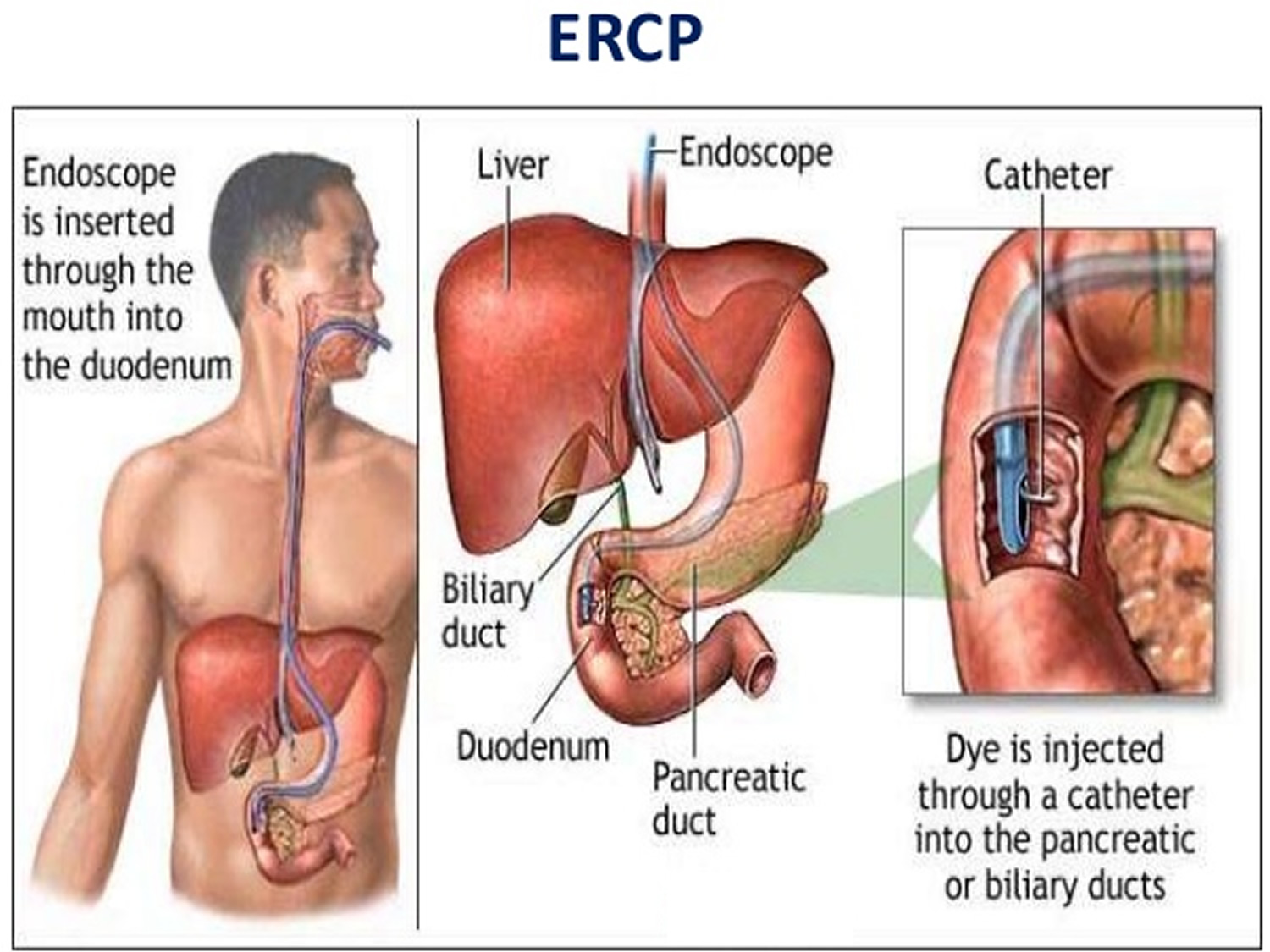
ERCP is an abbreviation for a medical procedure called Endoscopic Retrograde Cholangiopancreatography that combines upper gastrointestinal (GI) endoscopy and x-rays to to study the bile ducts, pancreatic duct and gallbladder and to treat bug of the bile and pancreatic ducts. ERCP is an advanced endoscopic procedure where a long, thin flexible tube with a photographic camera at the terminate chosen the endoscope is passed through your mouth, esophagus and stomach into the duodenum (outset part of the small intestine) down to where the bile and pancreatic duct opens into the small intestine. After your doctor sees the common opening to the ducts from the liver and pancreas, chosen the major duodenal papilla, your dr. will pass a narrow plastic tube called a catheter through the endoscope and into the ducts. Your doctor will inject a contrast fabric (dye) into the pancreatic or biliary ducts and volition take X-rays.
ERCP procedure well-nigh oft takes between 1 and 2 hours.
What are the bile and pancreatic ducts?
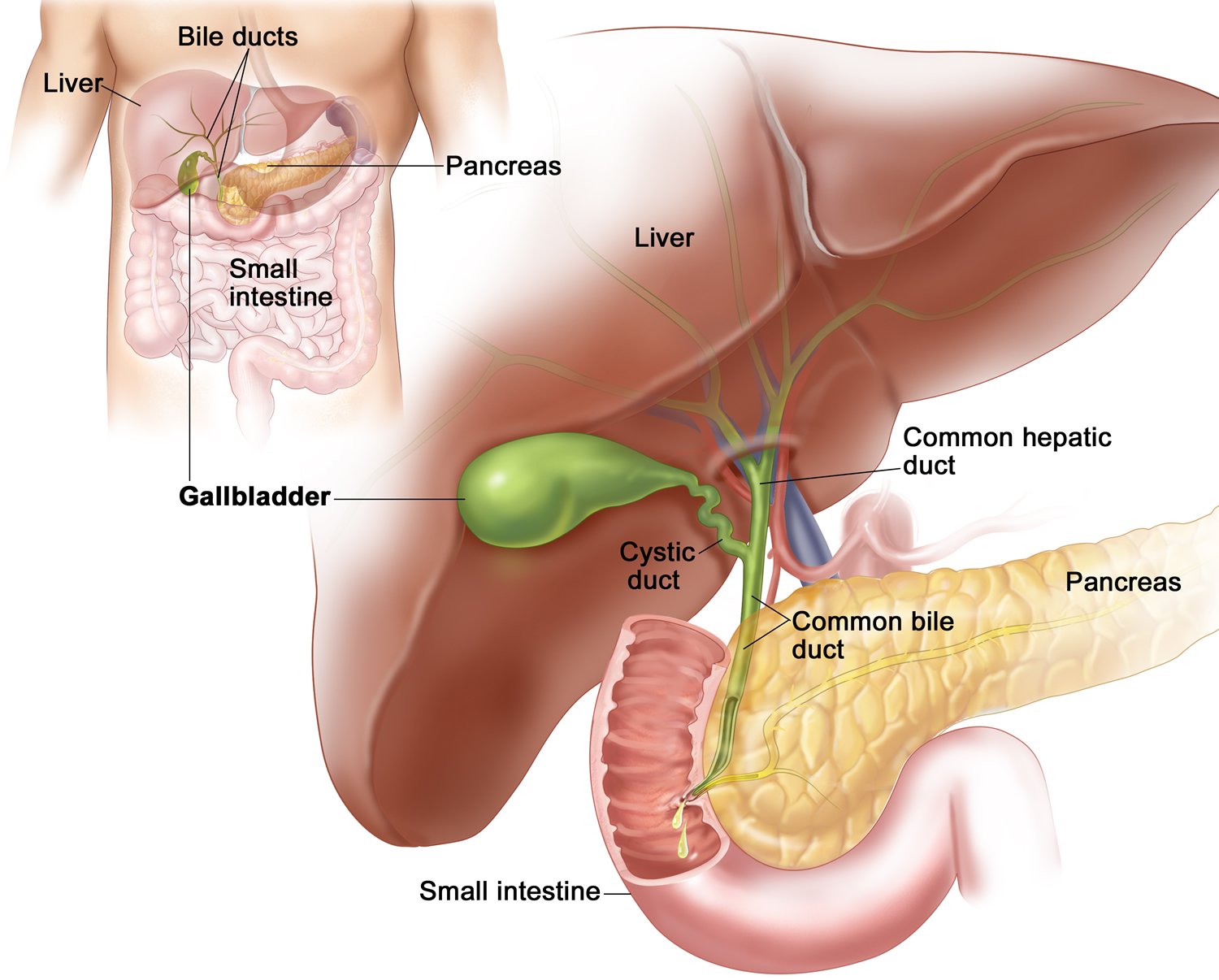
Your bile ducts are tubes that carry bile from your liver to your gallbladder and duodenum (see Figures 1 to 3). Your pancreatic ducts are tubes that carry pancreatic juice from your pancreas to your duodenum. Small pancreatic ducts empty into the main pancreatic duct. Your mutual bile duct and master pancreatic duct bring together earlier emptying into your duodenum (Figure 3).
Figure one. Gallbladder location
Effigy 2. Gallbladder anatomy
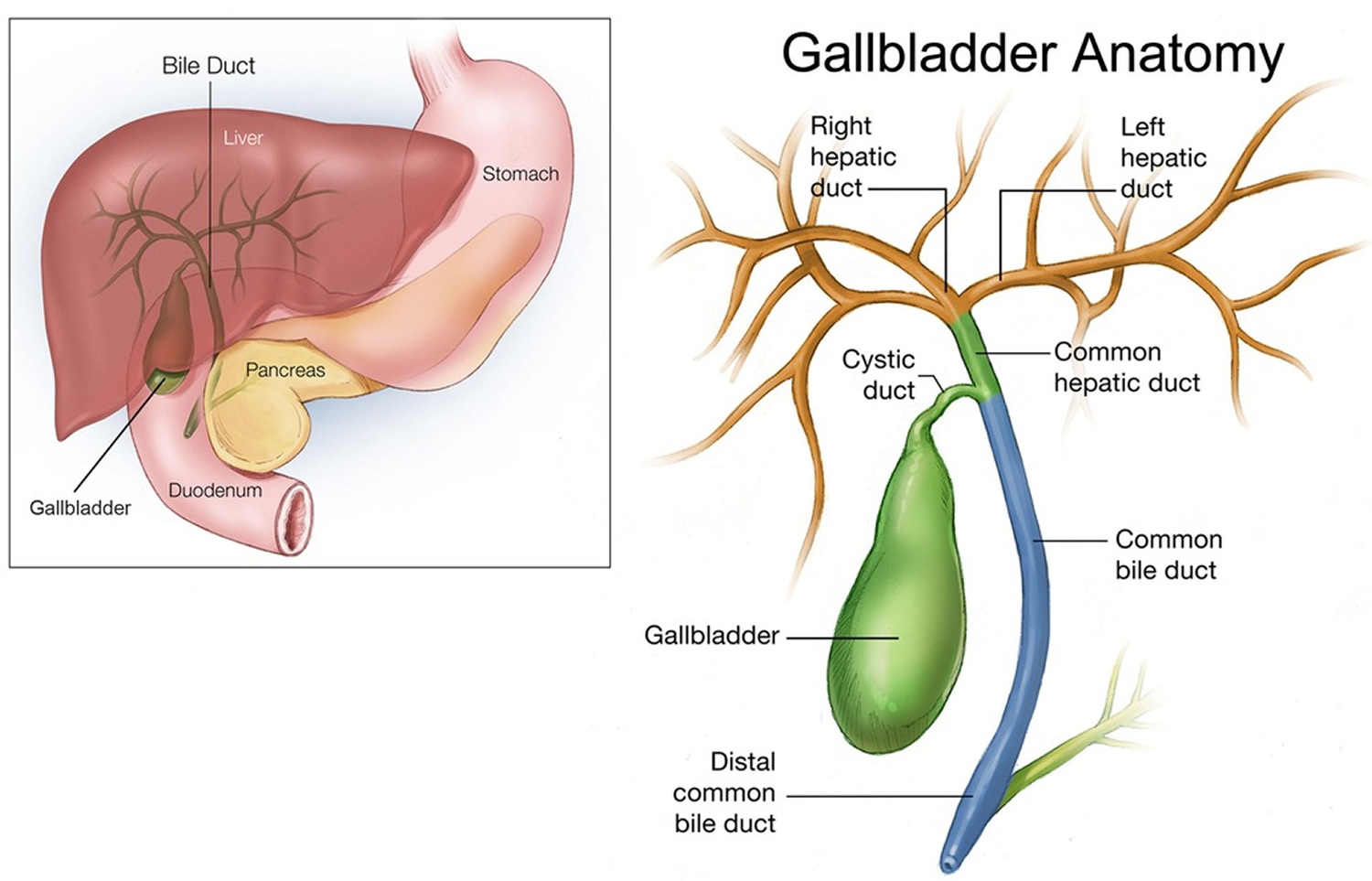
Figure iii. The common bile duct is closely associated with the pancreatic duct and the duodenum
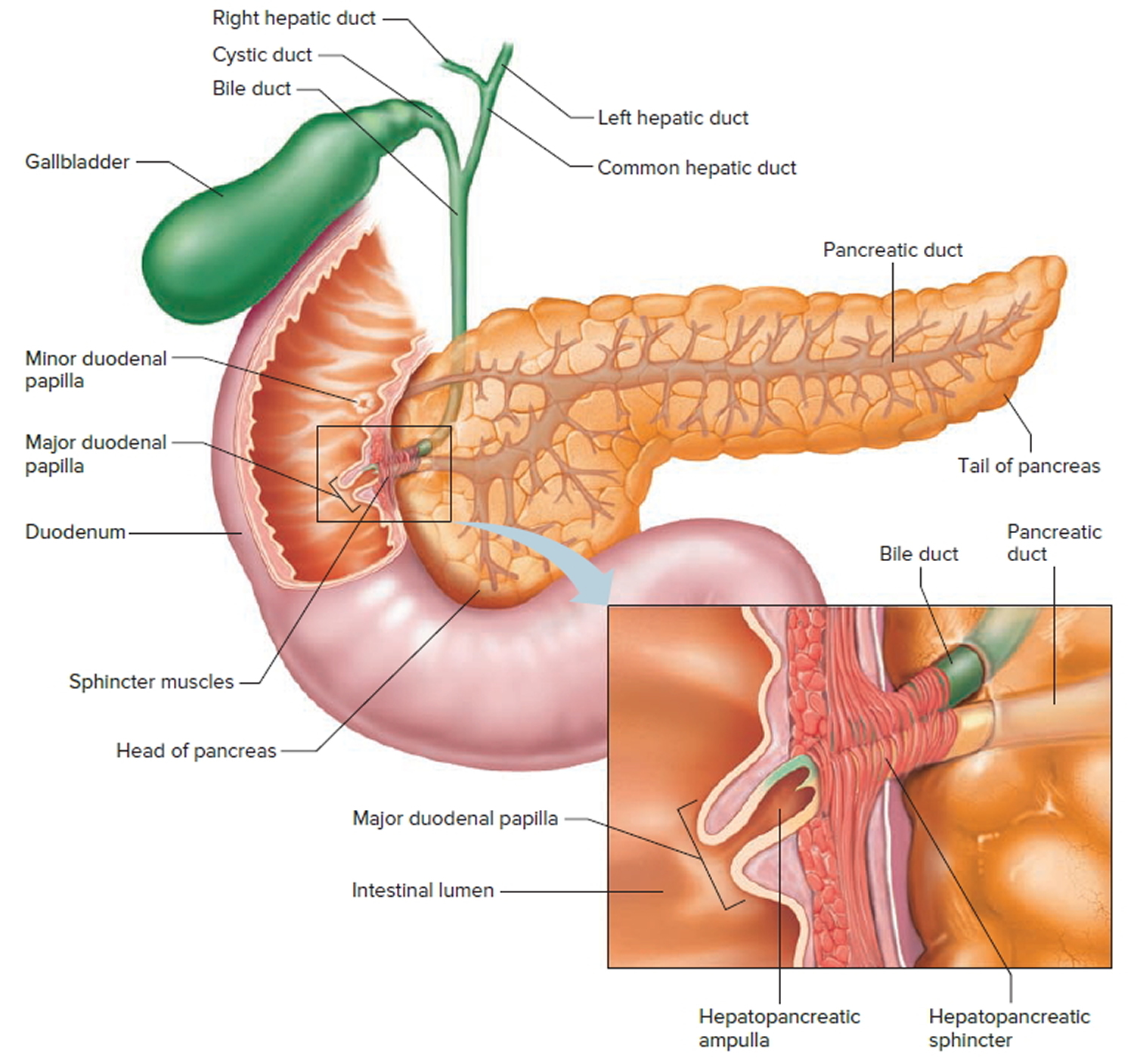 Figure 4. ERCP
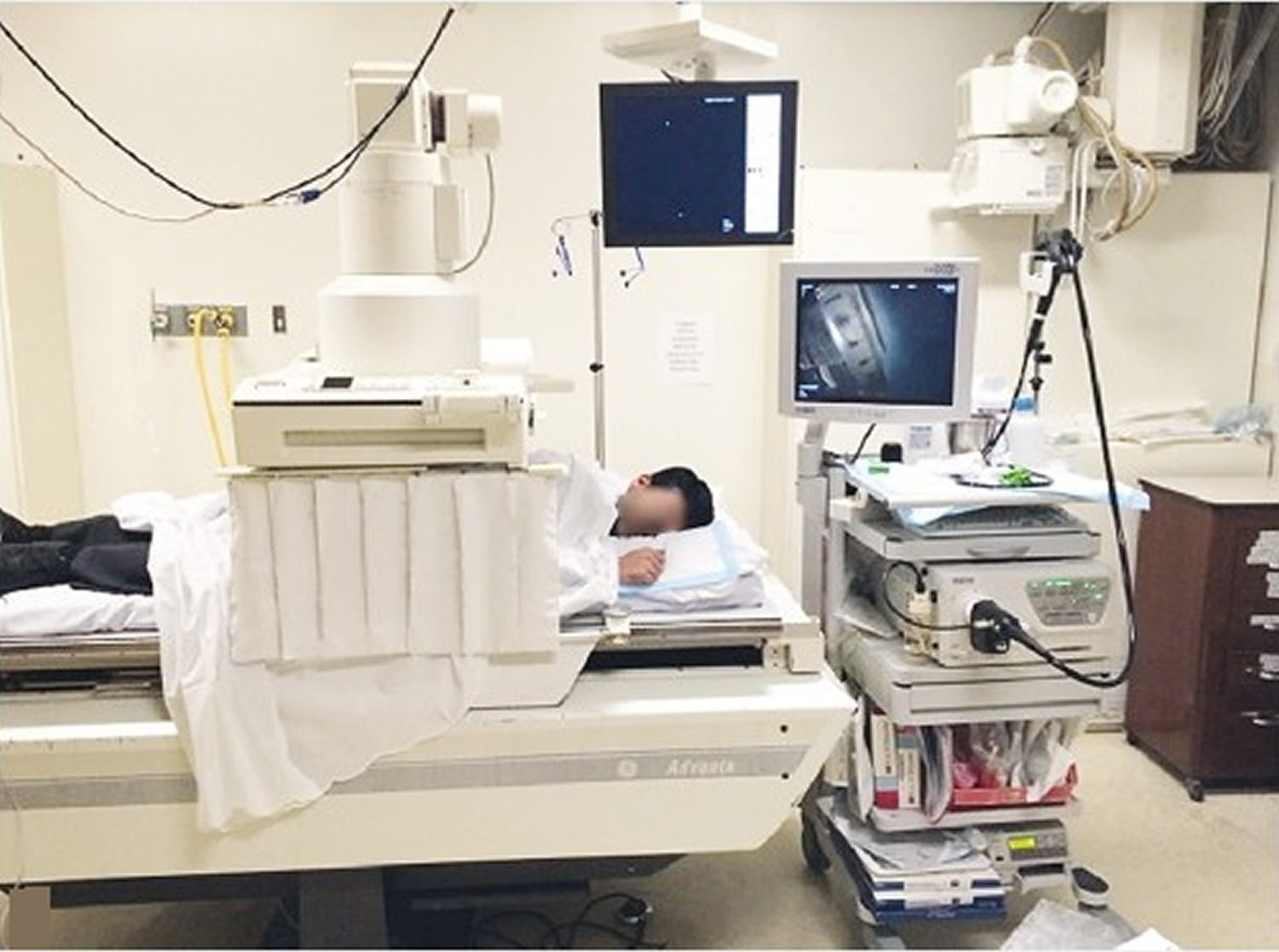
Effigy 5. ERCP suite
ERCP indications
Doctors utilise ERCP (endoscopic retrograde cholangiopancreatography) to treat problems of the bile and pancreatic ducts. Doctors also utilize ERCP to diagnose bug of the bile and pancreatic ducts if they expect to treat problems during the procedure. For diagnosis alone, doctors may use noninvasive tests—tests that practise non physically enter the body—instead of ERCP. Noninvasive tests such as magnetic resonance cholangiopancreatography (MRCP)—a type of magnetic resonance imaging (MRI) —are safer and can also diagnose many problems of the bile and pancreatic ducts.
Doctors perform ERCP (endoscopic retrograde cholangiopancreatography) when your bile or pancreatic ducts have go narrowed or blocked because of:
- gallstones that form in your gallbladder and go stuck in your common bile duct
- infection
- astute pancreatitis
- chronic pancreatitis
- trauma or surgical complications in your bile or pancreatic ducts
- pancreatic pseudocysts
- tumors or cancers of the bile ducts
- tumors or cancers of the pancreas
How do I gear up for ERCP?
To prepare for ERCP, talk with your doctor, arrange for a ride dwelling, and follow your doctor's instructions.
Talk with your doc
You should talk with your doctor virtually any allergies y'all have to medications or to intravenous contrast textile (dye). Although an allergy doesn't prevent y'all from having ERCP, it'south of import to discuss information technology with your dr. prior to the procedure, every bit you may crave specific allergy medications before the ERCP. Inform your doc about medications you lot're taking (all prescribed and over-the-counter medicines, vitamins, and supplements you take), particularly aspirin products, arthritis medications, anticoagulants (blood thinners, such as warfarin or heparin), clopidogrel or insulin. Also, be certain to tell your doctor if you take center or lung conditions or other major diseases which might foreclose or impact the decision to conduct endoscopy.
Medications list yous'll demand to tell your medico earlier having ERCP:
- arthritis medicines
- aspirin or medicines that comprise aspirin
- claret thinners
- blood pressure level medicines
- diabetes medicines
- nonsteroidal anti-inflammatory drugs (NSAIDs) such equally ibuprofen and naproxen
Your doctor may enquire you to temporarily stop taking medicines that affect blood clotting or collaborate with sedatives. You lot typically receive sedatives during ERCP to help you relax and stay comfy.
Tell your physician if you are, or may be, pregnant. If you are significant and demand ERCP to treat a problem, the md performing the process may brand changes to protect the fetus from 10-rays. Research has found that ERCP is generally safe during pregnancy 1) .
Arrange for a ride domicile
For safe reasons, you lot tin can't drive for 24 hours after ERCP, as the sedatives or anesthesia used during the process needs time to wear off. You volition need to make plans for getting a ride abode afterwards ERCP.
Don't eat, beverage, fume, or chew glue
To see your upper GI tract conspicuously, you doctor will nearly likely enquire you not to eat, potable, smoke, or chew gum for at least six hours (and preferably overnight) before the ERCP process to brand sure you have an empty stomach, which is necessary for the all-time exam. Your doctor will give you precise instructions near how to prepare.
How is ERCP performed?
Doctors who have specialized grooming in ERCP perform this procedure at a hospital or an outpatient center. An intravenous (IV) needle will exist placed in your arm to provide a sedative. Sedatives aid you stay relaxed and comfortable during the process. A health care professional will give y'all a liquid anesthetic to gargle or will spray anesthetic on the dorsum of your pharynx. The anesthetic numbs your pharynx and helps prevent gagging during the procedure. The wellness intendance staff will monitor your vital signs and proceed you as comfy as possible. Some patients also receive antibiotics earlier the process. In some cases, you may receive full general anesthesia.
You'll be asked to lie on your abdomen on a Ten-ray tabular array. The doctor will advisedly feed the endoscope downwards your esophagus, through your stomach, and into your duodenum. A small photographic camera mounted on the endoscope will send a video paradigm to a monitor. The endoscope pumps air into your tum and duodenum, making them easier to come across. The ERCP musical instrument does non interfere with breathing, but y'all might feel a bloating sensation considering of the air introduced through the instrument.
During ERCP, the doctor:
- locates the opening where the bile and pancreatic ducts empty into the duodenum
- slides a thin, flexible tube called a catheter through the endoscope and into the ducts
- injects a special dye, likewise chosen contrast medium, into the ducts through the catheter to make the ducts more than visible on x-rays
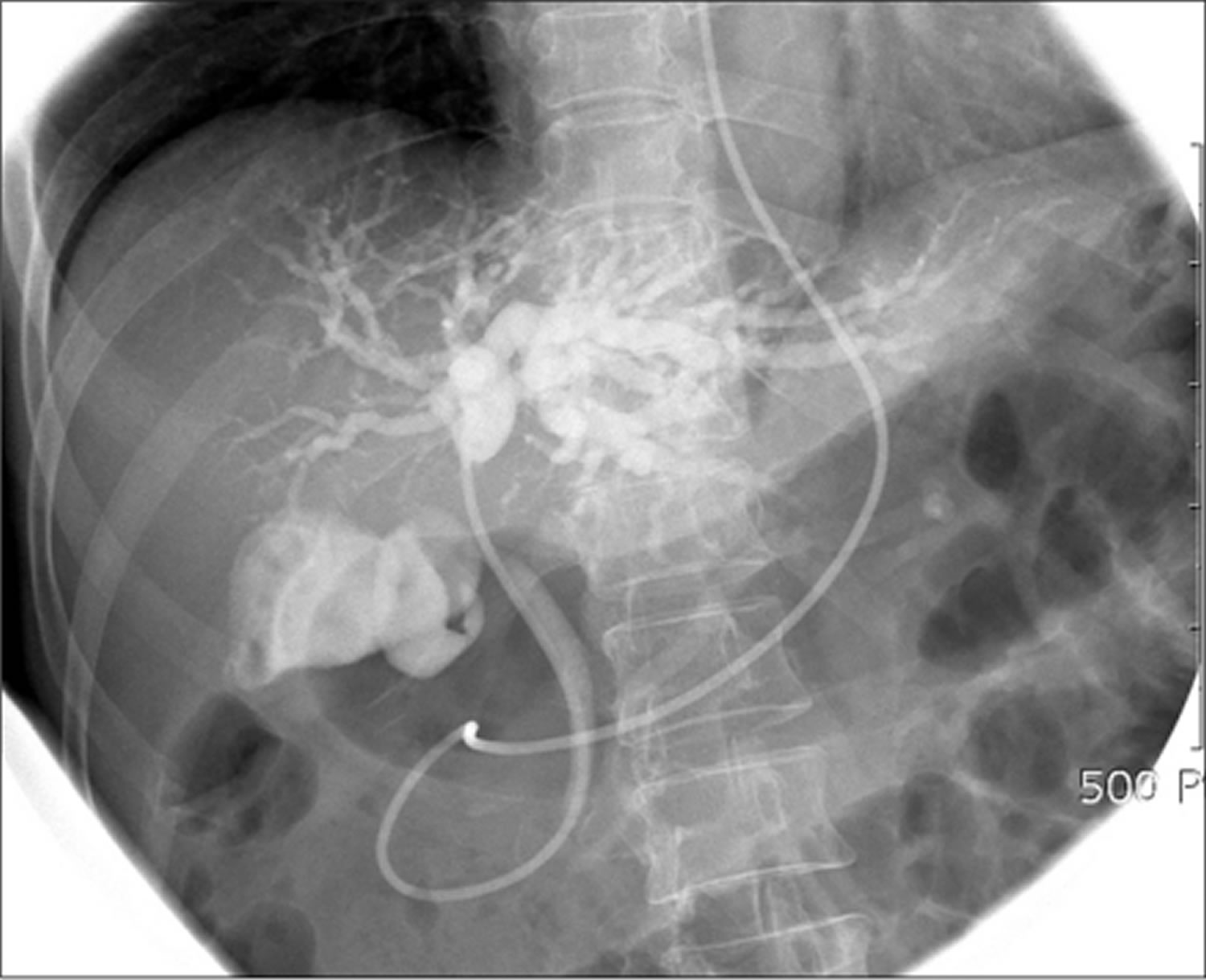
- uses a type of 10-ray imaging, chosen fluoroscopy, to examine the ducts and look for narrowed areas or blockages (run across Figure v below)
The medico may pass tiny tools through the endoscope to:
- open blocked or narrowed ducts.
- break up or remove stones.
- perform a biopsy or remove tumors in the ducts.
- insert stents—tiny tubes that a doctor leaves in narrowed ducts to hold them open. A dr. may as well insert temporary stents to stop bile leaks that tin occur later gallbladder surgery.
Figure six. ERCP showing multiple gallstones – Note: multiple filling defects with the mutual bile duct in keeping with choledocholithiasis.

Figure vii. ERCP showing stricture at the bifurcation of the hepatic duct, which was suggestive of a cholangiocarcinoma of the common hepatic duct. The final diagnosis was inflammatory myofibroblastic tumor of the biliary tree.
ERCP complications
ERCP is a well-tolerated procedure when performed by doctors who are specially trained and experienced in the technique. Although complications requiring hospitalization tin can occur, they are uncommon. The overall ERCP complexity rate requiring hospitalization is half dozen-ten%.
Depending on your age, your other medical problems, what therapy is performed, and the indication for your procedure, your complexity charge per unit may be higher or lower than the average. Your physician will discuss your likelihood of complications earlier you undergo the test.
Risks vary, depending on why the test is performed, what is found during the process, what therapeutic intervention is undertaken, and whether a patient has major medical problems. Patients undergoing therapeutic ERCP, such as for stone removal, face a higher risk of complications than patients undergoing diagnostic ERCP. Your doctor volition discuss your likelihood of complications before you undergo the test.
The risks of ERCP include complications such every bit the following:
- pancreatitis (inflammation of the pancreas)
- infection of the bile ducts or gallbladder
- excessive bleeding, called hemorrhage
- an abnormal reaction to the sedative, including respiratory or cardiac issues
- perforation in the bile or pancreatic ducts, or in the duodenum near the opening where the bile and pancreatic ducts empty into information technology
- tissue damage from 10-ray exposure
- death, although this complication is rare
- sometimes the process cannot exist completed for technical reasons.
Research has found that these complications occur in about five to 10 percent of ERCP procedures two) . People with complications frequently need handling at a infirmary.
Seek care right away
If y'all have any of the following symptoms after ERCP, seek medical attending right away:
- bloody or black, tar-colored stool
- chest hurting
- fever
- pain in your belly that gets worse
- bug breathing
- problems swallowing or throat hurting that gets worse
- airsickness—particularly if your vomit is bloody or looks like java grounds
What is a therapeutic ERCP?
ERCP (endoscopic retrograde cholangiopancreatography) is a study of the ducts that drain the liver and pancreas. Ducts are drainage routes into the bowel. The ones that drain the liver and gallbladder are called bile or biliary ducts. The one that drains the pancreas is called the pancreatic duct. The bile and pancreatic ducts bring together together merely before they drain into the upper bowel, virtually 3 inches from the stomach. The drainage opening is called the papilla. The papilla is surrounded by a circular muscle, called the sphincter of Oddi.
Diagnostic ERCP is when X-ray contrast dye is injected into the bile duct, the pancreatic duct, or both. This contrast dye is squirted through a small-scale tube chosen a catheter that fits through the ERCP endoscope. X-rays are taken during ERCP to get pictures of these ducts. That is called diagnostic ERCP. Yet, most ERCPs are actually done for treatment and not merely picture taking. When an ERCP is washed to allow treatment, it is called therapeutic ERCP.
What treatments tin can be done through an ERCP telescopic?
Sphincterotomy
Sphincterotomy is cutting the muscle that surrounds the opening of the ducts, or the papilla. This cutting is made to overstate the opening. The cut is made while your doctor looks through the ERCP scope at the papilla, or duct opening. A pocket-size wire on a specialized catheter uses electric current to cut the tissue. A sphincterotomy does not cause discomfort, you do not have nervus endings there. The actual cut is quite pocket-sized, normally less than a ane/two inch. This small cut, or sphincterotomy, allows diverse treatments in the ducts. Nearly commonly the cut is directed towards the bile duct, called a biliary sphincterotomy. Occasionally, the cutting is directed towards the pancreatic duct, depending on the blazon of treatment y'all need.
Stone Removal
The most mutual treatment through an ERCP scope is removal of bile duct stones. These stones may have formed in the gallbladder and traveled into the bile duct or may grade in the duct itself years after your gallbladder has been removed. After a sphincterotomy is performed to enlarge the opening of the bile duct, stones can be pulled from the duct into the bowel. A variety of balloons and baskets attached to specialized catheters tin be passed through the ERCP scope into the ducts allowing stone removal. Very big stones may crave crushing in the duct with a specialized basket so the fragments tin can be pulled out through the sphincterotomy.
Stent Placement
Stents are placed into the bile or pancreatic ducts to bypass strictures, or narrowed parts of the duct. These narrowed areas of the bile or pancreatic duct are due to scar tissue or tumors that cause blockage of normal duct drainage. There are two types of stents that are commonly used. The first is made of plastic and looks like a pocket-size straw. A plastic stent can be pushed through the ERCP telescopic into a blocked duct to let normal drainage. The 2nd type of stent is made of metal wires that looks like the cantankerous wires of a fence. The metallic stent is flexible and springs open to a larger diameter than plastic stents. Both plastic and metal stents tend to clog up after several months and you may require another ERCP to place a new stent. Metal stents are permanent while plastic stents are hands removed at a repeat procedure. Your doctor volition choose the best type of stent for your problem.
Balloon Dilation
In that location are ERCP catheters fitted with dilating balloons that tin can exist placed across a narrowed expanse or stricture. The balloon is and so inflated to stretch out the narrowing. Dilation with balloons is often performed when the cause of the narrowing is benign (non a cancer). Afterward balloon dilation, a temporary stent may be placed for a few months to help maintain the dilation.
Tissue Sampling
One procedure that is commonly performed through the ERCP telescopic is to accept samples of tissue from the papilla or from the bile or pancreatic ducts. At that place are several different sampling techniques although the most common is to castor the surface area with subsequent examination of the cells obtained. Tissue samples can assistance decide if a stricture, or narrowing, is due to a cancer. If the sample is positive for cancer it is very accurate. Unfortunately, a tissue sampling that does non show cancer may not be accurate.
ERCP recovery
Subsequently ERCP, you lot tin can expect the post-obit:
- You will nearly often stay at the hospital or outpatient middle for 1 to 2 hours after the procedure so the sedation or anesthesia can wear off. In some cases, you lot may need to stay overnight in the hospital after ERCP.
- Y'all may have bloating or nausea for a brusque time afterwards the procedure.
- You may accept a sore throat for one to 2 days.
- You can go back to a normal nutrition in one case your swallowing has returned to normal.
- You should remainder at home for the remainder of the day.
- You should not drive a motorcar for the rest of the solar day although most patients can return to full action the side by side solar day.
Following the process, you—or a friend or family member who is with you if you're yet groggy—will receive instructions on how to care for yourself after the procedure. You should follow all instructions.
Some results from ERCP are available right away afterward the procedure. Subsequently the allaying has worn off, the doctor will share results with you or, if you choose, with your friend or family member.
If the doctor performed a biopsy, a pathologist will examine the biopsy tissue. Biopsy results take a few days or longer to come back.
References [ + ]
Source: https://healthjade.com/ercp/

Post a Comment for "Will I Have to Have Ercp Again"